

👑The bestseller list is whoever TikTok says it is
BookTok writes its own bestseller list, YouTube stops pushing Shorts, and every brand wants to work with creators.
In this week’s stories:
TikTok crowned its own monthly bestseller list, replacing a hundred years of New York Times tradition with a formula built on vibes. YouTube listens to its users while betraying its creators. Similarly, Meta’s affiliate engine is built (stolen?) from creators’ content. Malibu rum used age-verification tech to slide ads into the feeds of the soberest generation in a century.
Spotify announced fitness as its next vertical, Amazon flipped its podcast business into a monetize-everything play, and new data confirmed that YouTube on the living room TV now competes with Netflix for ad dollars.
Catch up in 5 minutes
It’s the Creators delivers quick and insightful updates on creators, their businesses, and the platforms they use.
TikTok eats NY Times’ lunch
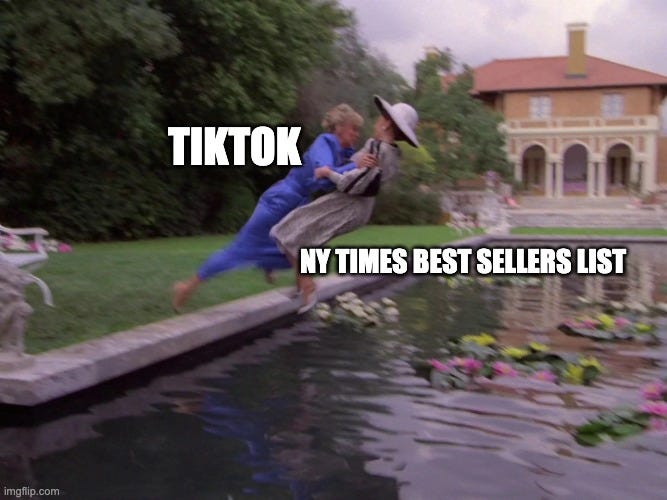
BookTok now has an official monthly chart. TikTok partnered with NielsenIQ BookData and Media Control to launch a U.K. bestseller list combining verified sales with on-platform engagement. Raw sales alone will not get you in. If the buzz is not loud enough, the book gets cut. They tested a chart in Germany in 2023, expanded to Austria and Switzerland, and now plan to enter every English-language market.
For forever, the phrase “hit the list” meant the New York Times list. The Times built its authority on slow, mysterious sampling and a quiet phone call to your editor. TikTok is replacing that authority with engagement metrics decided by its own algorithm that decides which books get read in the first place 😮.
YouTube listens to users, takes advantage of creators
YouTube is pulling two levers in opposite directions. On one side, it shipped a setting that lets users zero out their Shorts feed. The previous floor was 15 minutes a day. Now you can set it to zero, and the Shorts tab and feed disappear from the app. For a platform whose entire strategy was wedging Shorts into every available surface, that is a huge concession to users.
On the other side, YouTube is testing “Ask YouTube,” an AI search tool that returns a step-by-step guided answer instead of a list of videos. Type “plan a 3-day road trip along the west coast” and you get a packaged itinerary with text, short clips, and segments of longer videos stitched together. YouTube describes it as a way to help users discover content. Others might say it’s Google adding an AI summary on top of a video site to keep you from clicking through to the videos. YouTube spent fifteen years convincing creators their videos were the product. Now the videos are the training data and the answer is the product.
Malibu rum slides into Gen Z feeds via age-verification tech and get ready with me videos
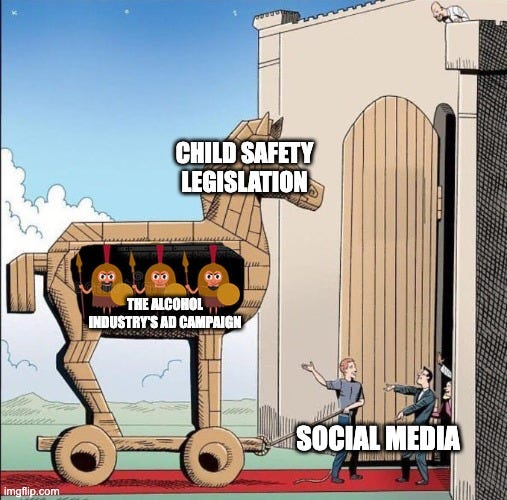
Malibu launched a new campaign with comedian and creator Sabrina Brier, built on the #GRWM format. The twist? Malibu is using TikTok’s age-verification technology to serve this campaign directly to the Gen Z demographic. Gen Z drinks less than any other cohort and accounted for only 4% of U.S. alcohol sales in 2025.
The original reason for age verification on social platforms was child safety, but the functional outcome is that brands can now target the exact 22-year-old who follows lifestyle creators and is statistically least likely to drink.
Streamers and conglomerates agree: creators === trust
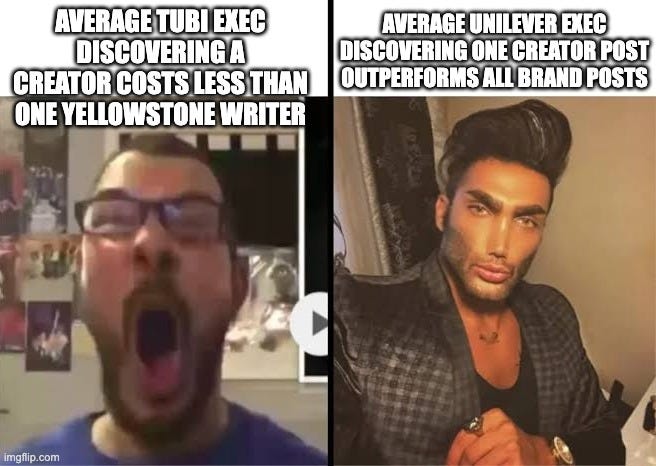
Tubi, the Fox-owned free streamer, continues to expand its creator-led originals slate. The streamer added TikTok food reviewer Keith Lee (planning a Tubi-original event called FamiLee Day), Traitors alum Bob the Drag Queen, and survivalist creator Sofi Manassyan, who is making a horror-mystery anthology called Who Did It?. Last year Tubi brought in former TikTok exec Kudzi Chikumbu to run creator partnerships and launched a creator studio inside Fox.
A year ago, Unilever CEO Fernando Fernandez announced the company would hire “20 times the amount of influencers” as part of a new marketing strategy. Hellopartner went back to check the receipts and Unilever kept its promise - the company now works with 300,000 influencers compared to 10,000 in the last two years. Fernandez says it’s necessary for building trust - messages from creators land where messages from corporations now barely register.
The C-suite of a CPG giant and the development team of a free streamer are arriving to the same conclusion. Audiences prefer an authentic individual over a faceless brand. Tubi puts a TikTok food reviewer in front of a slate that used to belong to network development executives. Unilever moves the influencer line item to the primary marketing channel. Both companies are paying creators to earn them trust that their own brand can no longer earn.
Meta moves into affiliate, and creators say it’s stealing their stuff
Meta has been quietly rebuilding Instagram into an affiliate engine with new AI partnership tools, expanded creator programs, and updated affiliate links. The wrinkle: creators like, Julia Berolzheimer, alleged that Instagram's "Shop the Look" feature was scraping her outfit posts and routing users to knockoff dupes, essentially stealing any potential affiliate commission from her. This is very similar to how YouTube is treating its creators. What happens when creators realize they are building their business on top of a platform that will just steal their traffic?
The UK officially recognizes creators as a real industry
Creator-led businesses now have a formal classification in U.K. economic data. That sounds boring, but SIC codes determine tax treatment, business banking access, mortgage applications, government grants, and trade body eligibility. A YouTuber in Manchester just became as legible in the UK tax system as a plumber.
The U.S. has nothing like this. The IRS still classifies most creators as miscellaneous self-employed.
Spotify launches fitness content, because what else is left
Spotify announced fitness as its next category after podcasts, audiobooks, video, and physical books. The pitch: workouts, classes, and trainer-led content slotted alongside your music and Joe Rogan. They are licensing from existing fitness brands and courting creators to build native shows.
Amazon turned podcasts into run-of-the-mill inventory
The New York Times reported that Amazon’s podcasting operation has transformed over the past six months. It’s shifting away from prestige exclusives, toward squeezing revenue out of every show in the catalog through ads, premium tiers, and bundling. Amazon Music is the distribution arm, Wondery is the studio, and each podcast is treated as an inventory unit, not a flagship.
It seems like the prestige-podcast era is over. Spotify spent a billion dollars on exclusive deals (Rogan, Obama, Meghan Markle) and quietly walked it back. Amazon is now formalizing the next model: scale and ad-load, forget exclusive talent. Independent podcasters get more distribution surface but lower per-show revenue.
Gen Z and millennials live on YouTube, officially
London-based ad-tech firm Precisify dropped a new report on U.S. viewers ages 13 to 44, breaking down how Gen Z and millennials actually consume video across streaming, social, gaming, and creator content. The headline: YouTube is the dominant surface across both screens (mobile and TV) and across both cohorts. Precisify pitches the data as the new backbone for ad planning.
The number that matters for creators: YouTube’s TV-screen viewership now rivals streaming services for younger millennials, which means creator content is competing for the same ad dollars as Netflix originals.
Thanks for reading.